News · 14 November 2026
Winter Wiper Blades for Cold-Weather Markets: A Seasonal Buying Guide
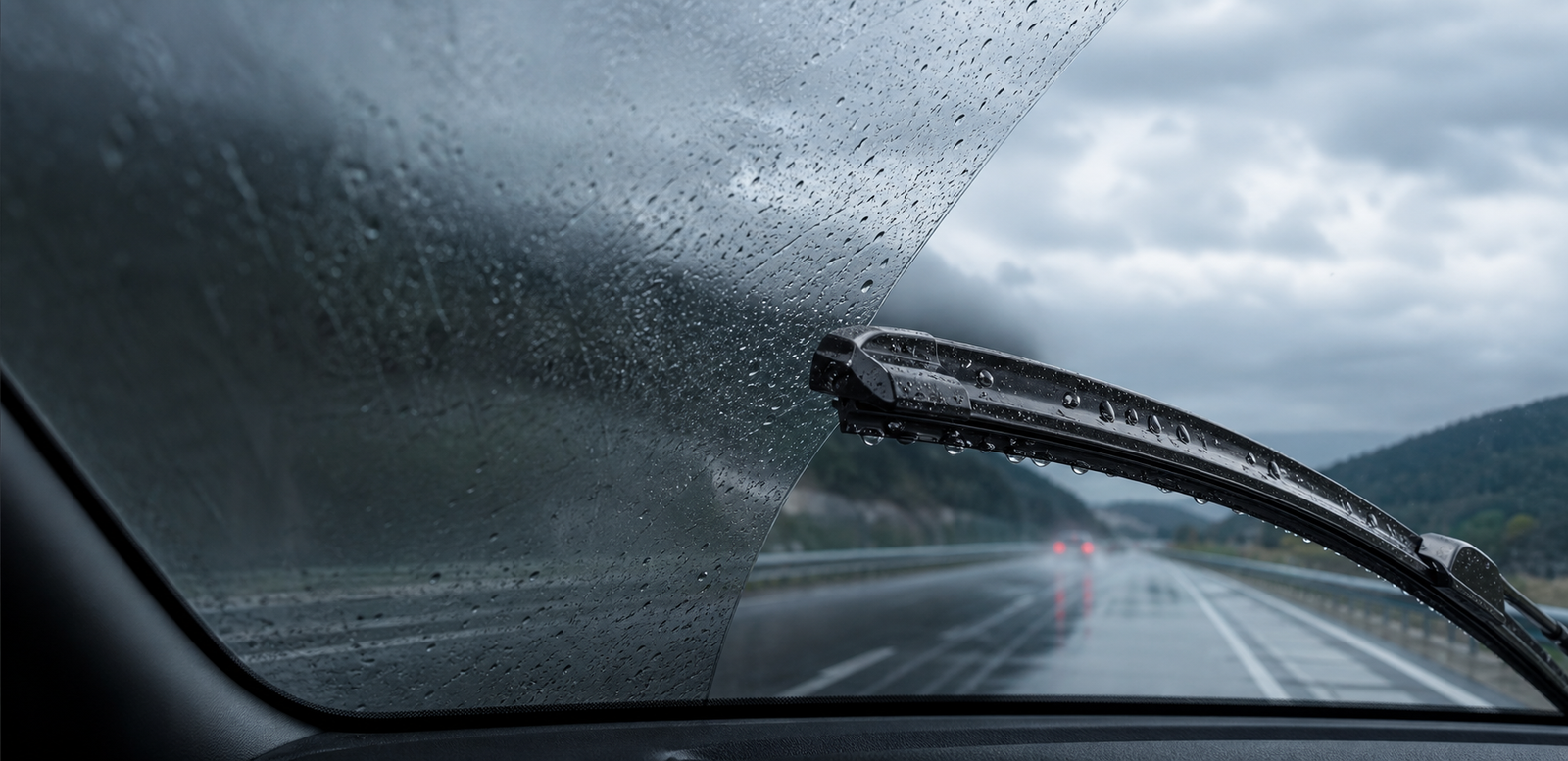
Short answer: a winter wiper is not a regular blade with a different box. It is built to keep wiping when the temperature falls below freezing, when ice forms on the glass and when ordinary rubber goes stiff. For importers serving cold-weather markets, winter is a distinct buying season with its own model, its own timing and its own size mix — and getting it wrong means arriving after the first snow. WEILONG's winter model is the WL-629 Snow Wiper, rated to operate normally at −40 °C.
What makes a snow wiper different
Three things fail first on a standard blade in winter. The rubber hardens and stops following the curve of the glass, so it streaks and skips. Ice and snow pack into the frame and jam the pressure points. And the connector can slip on the arm when everything is cold and wet. A dedicated snow wiper is designed around those three failures:
- Cold-rated rubber and construction — the WL-629 is a multi-functional snow wiper for extreme weather down to −40 °C, and it is specified to operate normally at that temperature rather than merely survive it.
- A locking connector — the WL-629 uses a press buckle that avoids interface slip, so the blade stays locked to the arm in freezing, wet conditions.
- Full multi-fit coverage — the WL-629 is suitable for 99% of car models and uses the Type-Q adapter family (21 adapters, Q1–Q21), the largest of WEILONG's six adapter families, so one winter model can fit hook, push-button, pin and bayonet arms across a mixed fleet.
The WL-629 is a patented design: WEILONG holds a Chinese design patent for the snow wiper (ZL 2022 3 0617828.7, granted 2023-01-03). For buyers comparing suppliers, a patented winter model is a concrete differentiator — it is not a generic blade relabelled for the season.
Which markets need a winter range
Any market with a real freeze: Northern and Eastern Europe, Russia and Central Asia, northern China, Canada and the northern United States. In those markets winter blades are not an accessory — they are the product customers ask for by name once the temperature drops, and the customers who buy them are often the same workshops and fleets that buy the rest of the range all year. A distributor that stocks only all-season blades in those markets loses the winter sale to a competitor that stocks a snow wiper.
For markets with harsh weather but no deep freeze — heavy rain, fog and sandstorms as well as snow — WEILONG's premium WL-661-PC boneless wiper is made for exactly that mix of conditions. The practical split for an importer is simple: WL-629 where the market freezes, WL-661-PC where the weather is harsh but the temperature rarely goes far below zero, and the standard boneless and hybrid ranges everywhere else.
How to time a winter order
Winter is a seasonal window, and the lead time decides whether you catch it. WEILONG's printed terms are 7–15 days for samples and 20–30 days for bulk orders, with loading from Qingdao or Tianjin ports — and sea freight still has to be added on top. An order placed in early autumn lands before the first snow; an order placed after the freeze starts arrives when the peak demand is already passing.
That is also why sampling matters more for winter than for a standard blade. A sample WL-629 in the sizes your market buys most lets you, or your customer, test the cold-weather claim before committing to a bulk order — and the sample lead time of 7–15 days is short enough to fit inside a normal pre-season plan. The minimum order is 1,000 pieces, so a winter range is typically ordered as a focused size run rather than a full-catalogue buy.
What sizes to stock
Winter does not change the size range — it changes which sizes move first. The WL-629 covers 12″ to 28″, the same front-blade range as the rest of the catalogue, with rear blades from 8″ to 16″ and truck and bus blades up to 40″ for fleets that run through the winter. As with the rest of the range, the common sizes from 16″ to 26″ move fastest, and a winter order should be weighted toward them, with the ends of the range covered in smaller quantities.
One practical tip: stock the winter model alongside the matching all-season blade in the same sizes. A customer who comes in for a winter blade in November is a customer who will need a replacement all-season blade in spring — and the workshop that fitted the snow wiper is the one they will come back to.
Frequently asked questions
What is the difference between a winter wiper blade and a regular one?
A winter or snow wiper is built to keep working in freezing conditions: its rubber stays flexible in the cold, its frame resists ice build-up, and its connector locks firmly so the blade cannot slip on the arm. WEILONG's WL-629 Snow Wiper is rated to operate normally at −40 °C, with a press buckle that avoids interface slip.
When should importers order winter wiper blades?
Before the cold season starts in the destination market. WEILONG's printed lead times are 7–15 days for samples and 20–30 days for bulk orders, plus sea freight from Qingdao or Tianjin — so an order placed in early autumn arrives in time for the first snow, while an order placed after the freeze starts will miss the peak.
Which sizes should a winter wiper range cover?
The same size range as the rest of the catalogue: front blades 12 to 28 inches, rear blades 8 to 16 inches, and truck and bus blades up to 40 inches. The WL-629 Snow Wiper itself covers 12 to 28 inches with Type-Q adapters, so one model can serve most passenger cars in a cold-weather market.
Sourcing winter wiper blades?
WEILONG supplies boneless, hybrid, metal frame, winter, rear, truck and bus wiper blades for importers, distributors and private-label buyers, with OEM packaging support. Send your size list and quantities for a quotation: